Acer Predator Triton 14 Ai First Look: Unboxing and Impressions
Introduction
The arrival of artificial intelligence in mainstream consumer laptops has signaled a new era for portable computing. Among the first wave of laptops to fully embrace this transition is the Acer Predator Triton 14 Ai, a device that promises not only improved performance but smart features for gaming, creation, and daily productivity. In this unboxing and first impressions review, we explore whether Acer delivers on these promises and how the Predator Triton 14 Ai stands apart from the competition.
Unboxing Experience
From the moment the Acer Predator Triton 14 Ai's packaging is opened, it's clear that this is a premium device. Wrapped in protective cushions, the laptop's sleek metallic finish immediately catches the light, and its compact, rigid chassis hints at a blend of mobility and power. Inside the box, along with the main unit, are the usual accessories: a robust charging adapter, documentation, and—importantly—a discrete set of quick-start guides catered for both everyday users and those eager to dive right into performance settings.
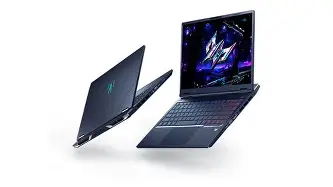
The build quality is excellent. The lid can be lifted with a single finger, suggesting finely balanced hinges, and the subtle yet distinctive "Predator" logo gleams atop the lid. This first tactile experience is crucial, as laptop buyers increasingly demand not only specification sheets but also a genuine sense of craftsmanship and durability.
Design and Build Quality
At a slim 18.9mm thickness and a weight just under 1.8kg, the Triton 14 Ai feels surprisingly portable for a gaming notebook. The magnesium alloy chassis provides structural rigidity without adding excessive bulk—a welcome design choice for buyers who regularly travel or commute. Edges are slightly chamfered to prevent discomfort during typing, and the matte finish does well at resisting fingerprints over time.
Acer has positioned the Predator Triton 14 Ai as both a professional tool and a gaming powerhouse. The keyboard deck layout is intuitive, featuring full-size arrow keys and a customizable RGB backlight, while the trackpad incorporates smooth glass for accurate multi-touch gesture support. The only minor ergonomic caveat is the vent placement along the edges, which can lead to perceptible warmth during extended gaming or creative sessions—though this is a common trait in high-powered laptops.
Display and Visual Performance
Acer outfits the Predator Triton 14 Ai with a 14-inch, 2.8K Mini LED display. The panel supports up to a 165Hz refresh rate and full DCI-P3 color coverage, making it ideal for both fast-paced gaming and color-sensitive creative work. During gaming sessions, motion remains fluid and crisp, with minimal ghosting or screen tearing—a clear advantage for competitive players. Content creators will appreciate the factory-calibrated colors and excellent brightness levels, which help when photo editing or video grading on the go.
HDR support also adds an extra layer of immersion for streaming movies or editing high-dynamic-range content, rivaling displays found on more expensive flagship devices.
Performance: AI Integration and Real-World Use Cases
The standout feature of the Predator Triton 14 Ai is its AI-driven hardware platform, featuring the latest Intel Core Ultra or AMD Ryzen AI processors (depending on region and configuration), paired with an NVIDIA GeForce RTX 4060 or 4070 GPU. On paper, these components would already be formidable. However, the dedicated AI coprocessor brings new utility that isn’t just theoretical—Acer has partnered with Microsoft and other ecosystem players to unlock next-generation features.
Shop the latest Laptops & Computers picks on Amazon.
See Deals →What does this mean for real-world use? In benchmarks, the system handles modern AAA games at 1080p and 1440p effortlessly, typically maintaining frame rates upwards of 90fps on ultra settings in titles like Cyberpunk 2077 and Call of Duty: Modern Warfare III. For creators, Adobe Photoshop and Premiere Pro have begun utilizing onboard NPUs for AI-enhanced tasks such as automatic object selection, upscaling, and real-time background noise removal in video edits—resulting in vastly accelerated workflows.
Office professionals and streamers will appreciate the laptop's support for AI-powered Windows Studio Effects, such as auto-framing during video calls, instant background blur, and real-time noise suppression on Zoom or Teams—all at negligible battery or CPU impact.
Thermals are kept in check thanks to the fifth-generation AeroBlade cooling system, which, while audible under heavy load, maintains comfortable operating temperatures. The system does get warm, especially during prolonged AI workloads or rendering sessions, but thermal throttling is rare thanks to well-designed exhaust paths.
Battery Life and Charging
While battery life has long been a weak point for gaming laptops, the Predator Triton 14 Ai manages a respectable showing. In mixed usage—including web browsing, video streaming, and typical productivity—the system averages between 7 and 9 hours on a single charge. Under heavy gaming or during intensive creative sessions, this drops to around 3 to 4 hours, typical for a laptop in this category.
Acer deserves credit for implementing rapid charging: moving from zero to 50% in roughly 35 minutes with the included adapter. For users accustomed to long commutes or on-location editing, this flexibility matters.
Connectivity and Ports
Recognizing that creators and gamers often rely on peripheral ecosystems, Acer has included ample connectivity. The Predator Triton 14 Ai offers:
- 2x Thunderbolt 4 (USB-C) ports—supporting charging and external display output
- 1x HDMI 2.1 port for 4K/120Hz external display output
- 2x USB-A 3.2 Gen 2 ports for legacy accessories
- 1x microSD card reader
- A combo 3.5mm audio jack
- Kensington lock slot for security-conscious users
Wi-Fi 6E and Bluetooth 5.3 are standard, ensuring fast, stable wireless connections for both gaming and creative cloud workflows.
Shop the latest Laptops & Computers picks on Amazon.
See Deals →Audio and Webcam
The stereo speakers, tuned with DTS:X Ultra, deliver satisfying clarity and volume for a small chassis, though bass response is understandably limited. The dual-microphone array gains a boost from AI-powered noise reduction—voices remain audible and clear even in noisy environments, a definite advantage during remote meetings. The 1080p webcam is sharp, with good color reproduction, and Windows Hello support adds the convenience of facial login.
Predator Sense Software and AI Features
Included with the Triton 14 Ai is the latest version of Predator Sense, Acer’s control hub. Here, users can monitor system stats, configure fan curves, monitor temperatures, enable or disable various AI features, and set up macro profiles for games or professional software. The software's AI features include dynamic scene detection during gameplay (automatically tuning performance settings for optimal visuals or battery life) and real-time noise cancellation for live streams.
Acer’s integration with Windows Copilot and other AI-powered apps promises ongoing updates—future software releases are expected to unlock even more on-device AI functionalities.
Pros & Cons
- Pros:
- Innovative AI hardware acceleration for gaming and productivity
- Premium, durable magnesium alloy chassis
- High refresh rate, color-accurate Mini LED display
- Excellent connectivity (Thunderbolt 4, HDMI 2.1, Wi-Fi 6E)
- Above-average battery life for a gaming laptop
- Customizable RGB keyboard and intuitive Predator Sense software
- Fast charging with a compact adapter
- Solid speaker and microphone setup for streaming/meetings
- Cons:
- Noticeable fan noise under sustained load
- Chassis heats up during intensive gaming or editing
- No full-size SD card slot (creators may need a dongle)
- Premium pricing puts it above some competitors with similar specs
- RAM is soldered—limited long-term upgradability
Comparison Table: Predator Triton 14 Ai vs Competing Laptops (Spring 2026)
| Feature | Acer Predator Triton 14 Ai | ASUS ROG Zephyrus G14 (2026) | Razer Blade 14 (2026) | MSI Stealth 14 Studio |
|---|---|---|---|---|
| Processor & AI Coprocessor | Intel Ultra/i9 or AMD Ryzen AI Dedicated NPU | AMD Ryzen 9 8945H + AMD XDNA NPU | AMD Ryzen 9 8940HS | Intel Core Ultra 7 155H |
| Graphics | NVIDIA RTX 4060/4070 | NVIDIA RTX 4060 | NVIDIA RTX 4070 | NVIDIA RTX 4060 |
| Display | 14" 2.8K Mini LED 165Hz | 14" QHD+ OLED 120Hz | 14" QHD+ 240Hz LCD | 14" QHD+ 165Hz LCD |
| RAM | Up to 32GB LPDDR5X (soldered) | Up to 32GB LPDDR5X | 16GB/32GB DDR5 (soldered) | 16GB/32GB DDR5 (soldered) |
| Storage | Up to 1TB PCIe 4.0 SSD | Up to 1TB PCIe 4.0 SSD | Up to 1TB PCIe 4.0 SSD | Up to 1TB PCIe 4.0 SSD |
| Battery Life (Mixed Use) | 7-9 hours | 7-8 hours | 8-9 hours | 7-8 hours |
| Weight | 1.8kg | 1.6kg | 1.7kg | 1.7kg |
| Ports | 2x Thunderbolt 4, HDMI 2.1, 2x USB-A, mSD | 2x USB-C, HDMI 2.1, 2x USB-A, mSD | 2x USB-C, HDMI 2.1, 2x USB-A | 2x USB-C, HDMI 2.1, 2x USB-A |
| Special Features | Windows Studio Effects, dynamic AI tuning, fast charging | Custom gaming profiles, AI creative suite | Vapor chamber cooling, advanced RGB | Studio-ready pre-set profiles |
| MSRP (Base Model) | $1,799 | $1,599 | $1,849 | $1,699 |
Buying Guide: Choosing the Right High-End 14-Inch Laptop in 2026
The market for portable high-performance laptops now offers more choices than ever. While the Acer Predator Triton 14 Ai stands out for its pioneering AI features and fit-and-finish, it’s important to match your specific needs to what each device offers. Here are key considerations for buyers:
- Performance Needs: If you need a laptop for demanding games and creative work flows—including photo/video editing, 3D rendering, or AI-assisted productivity—the Triton 14 Ai, ROG Zephyrus G14, or Razer Blade 14 all have the horsepower. Pay attention to GPU and RAM configurations.
- Display Quality: For content creators, color accuracy and display technology matter. The Triton 14 Ai’s Mini LED rivals OLED panels, which can be found on select models like the Zephyrus G14, but also delivers higher peak brightness for HDR.
- Portability: If you'll often carry the laptop in a backpack, the weight and battery life become paramount. While all devices listed are within a 1.6–1.8kg range, the subtle differences add up with daily carry. Evaluate advertised and real-world battery figures, and the availability of fast charging.
- AI Features & Ecosystem: An AI coprocessor can future-proof workflows, enabling new features through the life of the device. However, these are only as valuable as the software that supports them—buyers in creative or technical fields should check their preferred apps for NPU utilization. Windows 11, Copilot, and emerging third-party software make the most of these features.
- Build Quality & Ergonomics: A premium build, a good keyboard, accurate trackpad, and proper cooling are essential if you’ll use the device for hours at a time. Don’t neglect these for raw performance alone.
- Price-to-Value: Higher cost does not always mean the best match, especially if you don’t need every premium feature. Balance your must-haves against upgradability, serviceability (watch for soldered RAM), warranty, and bundled software.
- Future Proofing: As more workflows leverage AI-powered acceleration, consider devices with dedicated NPUs, even if you don’t need those features today. They can extend the usable life of your laptop.
Conclusion
The Acer Predator Triton 14 Ai marks a significant step forward for laptops at the intersection of gaming, creation, and productivity. Its blend of AI-accelerated hardware, premium construction, and a focused approach to user experience makes it one of the standout 14-inch machines of 2026. While not inexpensive, the Triton 14 Ai justifies its price for buyers who demand both top-end performance and next-generation features in a single, portable device.
For gamers, creators, and professionals seeking a truly versatile laptop that’s as forward-thinking as it is practical, the Triton 14 Ai delivers a compelling package. As AI technologies become integral to day-to-day workflows, devices like this will likely set the standard by which the next generation of ultrabooks and gaming systems are measured.