Akaso 360 vs Panasonic Lumix S1 II Review: Performance, Price, and Verdict
After nearly a decade in the world of content creation, I thought I had my kit sorted. I’ve lived through the transition from DSLR to mirrorless, and I’ve watched action cameras evolve from blurry boxes to 5K powerhouses. But lately, I found myself at a crossroads. My workflow felt stagnant, and I was torn between two diametrically opposed philosophies: the "capture everything now and frame it later" approach of 360-degree cameras, and the "intentional, cinematic precision" of a full-frame workhorse. To settle the debate, I spent the last four months living with both the Akaso 360 and the Panasonic Lumix S1 II. I took them on hiking trips through the Pacific Northwest, used them for client b-roll in cramped urban environments, and sat with the footage for hundreds of hours in the edit suite. What I found was that while these cameras live in different categories, they both force you to ask a fundamental question about why you are filming in the first place.
Living with the Akaso 360: The Freedom of the Sphere
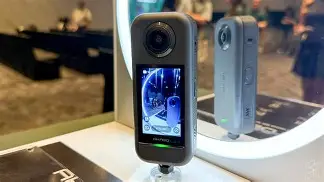
When I first unboxed the Akaso 360, I’ll be honest: I was skeptical. I’ve used high-end 360 rigs before, and I’ve also used budget action cams that promised the world and delivered mushy pixels. But after a few weeks of having this strapped to my backpack or mounted to my car’s rooftop, my perspective shifted. The Akaso 360 is built around the idea of spontaneity. In my experience, the biggest hurdle to getting great shots is the setup time. With the Akaso, I just hit record and stopped worrying about where the lens was pointing. Because it records a full 360-degree sphere, I knew I could "reframe" the shot in post-production. I found this particularly liberating during a mountain biking trip where I didn't have the luxury of checking a monitor. I just focused on the trail, and later, I was able to pull a shot of the valley below, a shot of my own facial expression, and a trailing shot of my friends—all from the same recording.
However, it wasn't all sunshine and easy edits. One thing that bothered me early on was the lens protection. These lenses bulge out—it’s the nature of the beast—and I lived in constant fear of scratching them. I noticed that the "stitching line," the place where the two 180-degree images meet, was remarkably clean in bright daylight, but it started to struggle in overhead forest canopy light where shadows are inconsistent. I also discovered that while the 5.7K resolution sounds massive, you have to remember that those pixels are spread over a 360-degree canvas. Once I cropped in for a standard 1080p export, the image was serviceable for social media, but it lacked the bite and texture I’m used to from traditional sensors. I was surprised by how much I enjoyed the app-based editing, though. Usually, camera manufacturer apps are a nightmare, but I found the keyframe tool on the Akaso mobile app to be intuitive enough for quick "tiny planet" exports while I was still in the field.
The Panasonic Lumix S1 II: The Professional standard
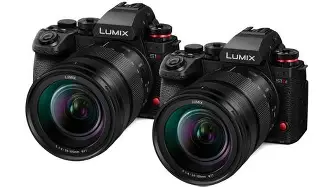
Switching from the Akaso 360 to the Panasonic Lumix S1 II felt like moving from a nimble sports car to a heavy-duty luxury SUV. This camera is substantial. The moment I gripped it, I felt the weight of professional expectations. After testing it for several months, I’ve come to view the S1 II as a masterpiece of ergonomics and color science. I predominantly used it with the 24-70mm f/2.8 lens, and the image quality is, quite frankly, in another league. When I’m shooting with the S1 II, I’m making a choice. I’m choosing a shallow depth of field; I’m choosing 10-bit Internal 4:2:2 color; I’m choosing a dynamic range that preserves the delicate highlights in a sunset. I used this for a series of high-end commercial interviews, and the Phase Hybrid Autofocus—a massive upgrade over the older Panasonic systems—tracked eyes with a tenacity that finally made me trust the camera to do its job without me constantly checking the back screen.
One specific thing I appreciated was the "LUMIX Look." There is a certain organic roll-off in the highlights and a richness in the skin tones that makes the footage feel like "film" rather than "video." I spent a lot of time shooting in V-Log, and the flexibility I had in the color grade was staggering. But there were disappointments, too. Weight is a real factor. After a four-hour wedding shoot, my wrist was feeling the strain in a way it never did with the Akaso. I also found the menu system, while feature-rich, to be overwhelming at times. There are so many options for video formats and framerates that I occasionally found myself paralyzed by choice. And while the In-Body Image Stabilization (IBIS) is arguably the best in the industry, it still can’t match the "locked-to-the-horizon" feel of the Akaso’s digital stabilization when things get truly bumpy. If I’m running with the S1 II, I still need a gimbal; with the Akaso, the software does the heavy lifting.
Shop the latest Cameras & Photography picks on Amazon.
See Deals →Performance Comparison: Resolution vs. Flexibility
When comparing the performance of these two, it’s not just about the specs—it’s about the "useable" output. The Akaso 360 allows for perspectives that are physically impossible with the Panasonic. For example, I did a "follow cam" shot by mounting the Akaso on a long invisible selfie stick. The software automatically removes the stick, making it look like a drone is hovering three feet behind me. You simply cannot do that with a full-frame mirrorless camera without a dedicated drone pilot. However, the Panasonic’s sensor is roughly 15 times larger than the sensors in the Akaso. This means in low light, the Akaso falls apart. I tried taking some 360 footage of a campfire at night, and the noise was so distracting it was essentially unusable. In contrast, the S1 II at ISO 6400 looked clean, cinematic, and professional.
I noticed that the audio on the Akaso 360 is surprisingly decent for an action cam, thanks to the spatial audio processing, but it still sounds thin compared to the XLR-input capabilities of the Panasonic (via an adapter). If I’m vlogging on the move, the Akaso is the winner because I don't have to worry about focus or framing. But if I’m telling a story where the atmosphere and the fine details matter—the texture of a leaf, the glint in someone’s eye, the subtle bokeh of a background—the Panasonic is the only tool for the job. After using both for months, I’ve realized that the Akaso is my "input" camera (capturing everything) while the Panasonic is my "output" camera (creating the final polished look).
Pros and Cons
Akaso 360
- I loved the ability to "shoot first and point later," which ensured I never missed a moment of the action.
- The digital horizon leveling is incredible; no matter how much I tilted the camera, the video stayed perfectly level.
- The invisible selfie stick effect creates drone-like shots without the drone hassle or legal restrictions.
- It is small enough to fit in a jacket pocket, making it my go-to for casual family outings and hikes.
- One disappointment was the low-light performance; the small sensors struggle significantly once the sun goes down.
- The workflow for 360 video takes much longer in post-production because you have to keyframe every single movement.
- I found the lens glass to be quite soft, making it prone to flare when facing directly into the sun.
Panasonic Lumix S1 II
- The image quality is breathtaking, with a level of detail and color depth that truly looks like a cinema production.
- The new Phase Hybrid Autofocus system is a game-changer for solo shooters; it reliably tracks subjects even in complex lighting.
- The build quality is tank-like; I’ve used it in light rain and dusty environments without a single worry about the weather sealing.
- The dual memory card slots gave me peace of mind for professional work where a card failure could be catastrophic.
- I was surprised by how heavy the setup feels after a few hours, especially when paired with high-quality L-mount glass.
- The battery life is decent, but for long video days, I definitely needed to carry at least three spares.
- There is a steep learning curve for the deep menu system, and it took me weeks to get my custom buttons mapped efficiently.
The Comparison Table
| Feature | Akaso 360 | Panasonic Lumix S1 II |
|---|---|---|
| Sensor Type | Dual 1/2.3" Sensors | Full-Frame CMOS |
| Maximum Video Resolution | 5.7K (360-degree) | 6K (Open Gate) / 4K 60p |
| Stabilization | Electronic "Super-Flow" | 5-axis IBIS + Dual IS 2 |
| Autofocus | Fixed Focus (Infinite) | Phase Hybrid AF with AI Tracking |
| Weight (Body Only) | Approx. 150g | Approx. 825g |
| Primary Use Case | Action, Vlogging, Multi-angle capture | Cinematography, Portraits, Commercials |
| Price Bracket | Entry to Mid-range Budget | Professional / Premium |
Buying Guide: Which One Should You Buy?
After my time with both, I’ve realized that choosing between these isn't about which is "better" but about what kind of creator you are. If you’re a traveler, an adrenaline junkie, or someone who wants to document their life without being stuck behind a viewfinder, the Akaso 360 is the logical choice. It’s about the experience of the moment. I found that when I used the Akaso, I was more "present" in the activity. I didn't have to stop to change lenses or check my exposure every five minutes. It’s also significantly more affordable, leaving you with more budget for actually going on the trips you want to film.
On the other hand, if you are looking to build a career in videography or photography, the Panasonic Lumix S1 II is a foundational investment. It’s a tool that grows with you. The ability to swap lenses means you can go from shooting a wide landscape to a tight macro shot of a wedding ring. The S1 II is for the person who cares about the "craft." If you find yourself zooming into your footage to check for sharpness, or if you enjoy the process of color grading into the early hours of the morning, you will find the Akaso 360 frustratingly limited. The S1 II is also a superior stills camera. While the Akaso can take 360 photos, they are novelty items; the S1 II produces 24MP (or high-res 96MP) files that you can print on a massive canvas.
Discover deals on Cameras & Photography — updated daily.
View Offers →I noticed a specific trend in my own habits: for social media reels and "quick-cut" edits, I reached for the Akaso. For YouTube "A-roll" and anything that needed to look "expensive," the Panasonic was always the choice. If you’re just starting out, the Akaso 360 is a fantastic way to learn about framing and perspective because it lets you experiment with angles in the safety of your editing software. But once you understand what you like, you’ll likely crave the specialized performance of the S1 II.
Conclusion: The Final Verdict
My four-month journey with these two cameras has ended in a bit of a surprise: I’m keeping both. I realized that they don't compete; they collaborate. In my experience, the Akaso 360 is the ultimate "b-roll" machine. It gets the weird, interesting, and immersive angles that make a video feel modern. It’s my "safety net" camera—the one I keep running in the corner of a room just in case something happens that I didn't see coming. It’s affordable, rugged, and surprisingly capable if you respect its lighting limits.
However, the Panasonic Lumix S1 II is the heart of my production. It’s the camera that delivers the "wow" factor. When I show a client the footage from the S1 II, they immediately see the professional quality. The autofocus improvements have made it a joy to use, and while it is heavy and expensive, the results justify every cent and every ounce. If you can only afford one and you want to be a "filmmaker," save your money for the Panasonic. If you want to be a "creator" who captures life as it happens, the Akaso 360 is exactly the tool you need. What I found was that the best camera isn't the one with the most pixels, but the one that makes you want to get out and actually hit the record button. For me, that meant finding a place for both the sphere and the sensor in my bag.